Wednesday, February 12, 2014

Have a Cocktail: Variations on Greta Christina's Half Century

Not long ago, I sang the praises of the Half Century cocktail Greta Christina created, as published on her most excellent blog. I think I must've mentioned that the secret sauce of this delightful libation was the cardamom simple syrup. The thing is, the Half Century recipe requires 1/2 oz of this nectar... but the recipe Greta provided makes nearly a pint. What to do, what ever to do?

Well, make more drinks, obviously, amirite? After making a second Half Century (just for research, of course, to verify the initial results), I set about experimenting with variations on the theme.

My first thought was to try replacing the rye with Connecticut's own Onyx Moonshine (made in nearby East Hartford) and the lime juice with lemon juice, producing what I call, in deference to the fact that Connecticut is much older than Greta, the Four Centuries:
  • 2 1/2 oz Onyx Moonshine
  • 1 oz cardamom simple syrup
  • 1 oz fresh lemon juice
  • Dash orange bitters.
 This is brighter and lighter than the original, partly because the Onyx doesn't have the woody, smoky notes of a barrel-aged whiskey, but it has the smoothness of a whiskey drink, as opposed to the sharp bite of vodka or gin. Very nice.

And then tonight I ate half a grapefruit, looked at the leftover juice in the bowl, and thought (as I have before), "hmm, I should make a cocktail with that." Thus was born the Eastern Half Century, which is a kind of cross between Greta's original and the Eastern cocktail I blogged about earlier, replacing the latter's maple syrup with the former's cardamom:
  • 2 1/2 oz rye whiskey
  • 1 1/2 oz cardamom simple syrup
  • 1 oz fresh ruby red grapefruil juice.
Also very nice. And the beauty part? I still have a couple cups of the cardamom syrup!

Monday, January 27, 2014

Casual Fearmongering

This story makes me grind my teeth. The front-page HuffPo¹ link that led me to it screamed “Why You Should Never, Ever Put a Lemon Wedge in Your Water Glass,” implicitly suggesting some truly dire consequences: Has lemon been found to be carcinogenic? Does some chemical in lemon peel combine with water to produce a deadly toxin?

No, of course not: It's germs. "Restaurant patrons should be aware that lemon slices added to beverages may include potentially pathogenic microbes," the story tells us, based on a study that showed swabs from "the rinds and flesh of 76 lemons from 21 restaurants collected during 43 visits" produced "microbial growth" 70 percent of the time.

Oooh, yuck! Germs! Right? And not just germs, but a dizzying array of microbes and contaminants, some associated with presumptively yucky bodily regions. The article gives us every reason to be frightened and disgusted.

You know what it doesn't give us? Any reason whatsoever to believe that lemon wedges in the water glass actually make anyone sick. To begin with, the proposed mechanisms of contamination — inadequate washing of the lemons and kitchen workers' hands — are hardly unique to lemons, and could just as easily apply to any food item that passes through the kitchen and is served raw. Why pick on lemons, which "have known antimicrobial properties," as opposed to other produce? Neither the HuffPo article nor either of the sources it links to suggests even a correlation, much less a causal relationship, between lemon wedges and increased rates of illness.

A much more likely conclusion from the facts presented here is that germs, far from being uniquely harbored by lemons, are found pretty much everywhere, and even "potentially pathogenic" organisms most often do no harm, as even the researcher, Dr. Philip Tierno, seems to admit: "The usual course will probably result in no infection, but there is a possibility.... You can't live in a bubble. Your immune system is usually pretty good." Personally, I plan to continue asking for lemon in my drink, and I encourage you to do the same.

Stories like this one aren't designed to answer legitimate questions or solve actual problems; they're designed to disgust you and scare the crap out of you for no better reason than sensationalism. Food safety is serious business, of course, but stories like this that decouple our sense of risk from any realistic evaluation of actual harm contribute to our already skewed and irrational perceptions about what is and is not worth worrying about.

It's because of casual fearmongering like this that so many of us feel like we can't have properly cooked pork or enjoy runny egg yolks or eat raw cookie dough.

Beyond the world of food, it's also why we're more afraid of vaccinations than of the measles, why some folks are terrified of their cellphones, and why we can't have shampoo or shaving lotion in our carry-on bags. It's simply easier, not to mention sexier, to present armwaving stories about scary, scary risks than it is to rationally and realistically link causes to their actual effects.

And that makes me grind my teeth

—— 
¹ HuffPo being HuffPo, I make no warranty as to what link text or headline you'll find when you click through; they seem to change somewhat capriciously

Wednesday, January 15, 2014

Have a Cocktail: Greta Christina's Half Century

I don't read Greta Christina's wonderful blog for cocktail recipes any more than I follow Rachel Maddow for them... but the latter's occasional cocktail moments spurred my interest in mixology, and now the former has provided my latest favorite drink.

Taking a bit of a break from blogging to work on her forthcoming book, Greta had been reposting some older articles, and it was my (and everyone's) good luck that one of them was for the Half Century, a drink she'd devised a couple years before to celebrate her 50th birthday. The drink itself, which Greta describes as "roughly a whiskey sour made with lime juice and cardamom simple syrup," is straightforward:
  • 2 oz rye whiskey
  • 1 oz cardamom simple syrup
  • 1/2 oz fresh squeezed lime juice
Regular readers (are there any) will know that she had me at "rye," but it's really the cardamom simple syrup that makes it magic (and I'm going to make you actually go read Greta's post to get that recipe¹). It's awesomely good smelling to make, and awesomely delicious. It makes this a go-to whiskey drink and I can't wait to find new ways to use it!


———
¹ Be sure to read the comments for clarification on exactly what kind of cardamom you need and how to source it.

Actual Cook(book)ing: Edward Lee's Lime Beef Salad

I managed to get off to a decent start on my New Year's intention to cook at least one recipe a week from one of the cookbooks I've accumulated over the last few years. I didn't count the first, partial week of the year, part of which I spent on the road (traveling home from Florida) in any case, but I managed to cook something during the first full week of the year... just barely... on Saturday.

Inspired by Top Chef alum Edward Lee's appearance as a guest judge on The Taste, I decided to cook something from his cookbook, Smoke & Pickles: Recipes and Stories From a Southern Kitchen. Because I'm home alone for a bit while my wife is taking care of some family business, the Pulled Pork Shoulder in Black BBQ Sauce (page 116) seemed excessively massive, as did the Brined Pork Chops With Peach-Ginger Glaze (page 110). Finally I settled on the Lime Beef Salad (page 50), which seemed like a manageable amount of food, and something that would make for good leftovers.

It's essentially a cabbage and mango salad with accents of tomato, mint, jalapeno, and black sesame seeds, topped with a lime-ginger Asian vinaigrette and thin strips of sirloin lightly cooked in a simmering ginger-garlic broth.

I followed the recipe nearly exactly, except that I didn't use all of the mango — just because it started to look like an exceptionally big pile of mango as I was cutting it into matchsticks — and I substituted 1 1/8 tsp of maple syrup for the brown sugar (because all the brown sugar in the house turned out to be solid as a rock).

The process is straightforward:
  • Mix the vinaigrette ingredients in a bowl, cover, and put in the fridge to chill. 
  • Cut up the cabbage, mango, pepper, and other ingredients for the salad, toss together in a bowl, and put that, covered, in the fridge, too.
  • Bring the water, ginger knob, garlic clove, and salt to a boil, then reduce the heat and let it simmer for about 15 minutes.
  • While the water is simmering, cut the beef into strips and pound it paper thin (I thought this would trip me up, but it turned out to be dead easy. I used sheets of plastic wrap and a bit of water, as I recalled seeing on Good Eats.)
  • Get the cold vinaigrette out, lightly cook the beef strips in the simmering water (for 10 seconds or less, depending on how rare you want it), and drop them immediately into the vinaigrette.
  • Add the vinaigrette and beef to the salad and toss to combine.
  • Portion the salad and top with chopped cilantro and peanuts.


The recipe says it serves 4, and I suppose that's right as an appetizer salad; as an entree, I had a full plate and a second helping, and  had enough left over for a decent lunch.

You could serve the salad and vinaigrette — bright, sweet, spicy, and gingery — as an appetizer salad without any beef at all, or double (or more) the amount of beef for a more substantial entree. I loved this dish, and I'm sure I'll fix it again!

Thursday, January 2, 2014

Crowdsourcing a "Perfect" Hack

My sister likes gadgets, so when it came time to go Christmas shopping for her, I naturally wandered into Brookstone, and she likes to entertain in her beautiful Florida home, so in Brookstone my eyes naturally wandered to the Perfect Drink app-controlled bartending set.

Actually, on my first foray into the store, I passed this gadget by, not quite getting that this wasn't just another electric shaker or some other such I-don't-really-need-a-machine-to-do-that sort of tool. But on the next trip, when I was starting to get desperate, I happened to be in the store when someone was doing a live demo (similar to this video), and I saw what a truly cool thing this was: An app-controlled smart scale that tracks the pour of each ingredient, including scaling for multiple servings and correcting for overpours by proportionally scaling the other ingredients. It even senses when you pick the shaker up from the scale and starts a timer to ensure you shake long enough!
 
It's just cool.
 
But it didn't take me long to realize that the concept would be equally useful for all recipes; not just cocktails. Alton Brown made a point, throughout the run of Good Eats, of basing his "applications" on weights, and I can imagine a Perfect Drink-like gadget/app that would work for complex, multistage dishes just as well as for a three- or four-ingredient mixed drink. The hardware — the smart scale itself — is right there; all that's needed is the app.
 
Surely, I thought, such an app had already been produced... but if so, my poor searching skills haven't been up to finding it. This prototype seems more focused on homebrew hardware; the Prep Pad from Orange Chef seems more focused on precision and nutritional analysis than on reecipe process management (and besides, it costs more than twice as much as the Perfect Drink hardware).
 
So I have to ask all my geeky, software inclined friends: How hard would it be to write a full-featured cooking app that would use the Perfect Drink smart scale hardware as approachably and effectively as the original cocktail set does?
 
Enquiring minds want to know!

Wednesday, January 1, 2014

New Year, New Toys

This will be brief, because it's already 11:00 pm EST as I begin, and I want to publish before the end of New Year's Day.

By now, I know better than to promise any particularly consistency of blogging in 2014: It is, in fact, my goal to write here regularly, but if past is prologue, it's likely that the new year will include, as have years past, long hiatuses (hiati?), dropped projects, and all manner of broken promises with regard to my writing in this space.

One promise I mean to keep, though, is to cook more. I have been putting cookbooks at the top of my birthday, Fathers' Day, and Christmas wish lists for several years, now, and between gifts and my own packratacquisitional nature, I've acquired quite a library of them... of cookbooks, that is, that I've hardly cooked out of at all. My resolution for the coming year is to correct that, and to that end, I didn't put any cookbooks on my wish list this holiday season.

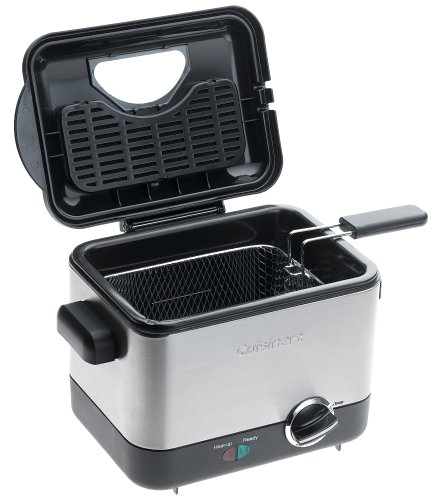
So instead of books, I got a food processor and a deep fryer. My plan is to try to cook a new recipe from my library at least once each week, and to report on it here.

Watch this space!

Wednesday, November 13, 2013

I Knew It!

When this story hit the headlines and all my feminist friends (which is to say, all my friends) reacted with outrage, I saw something other than a normative, male-dependent, self-loathing woman: I saw an ambitious stunt-blogger who was looking to parlay a self-consciously provocative story into a book deal and a shot at being the next Julie Powell.

Sure 'nuff!

Mind you, the feminist critique is warranted: The tale of Stephanie Smith's 300-sandwich race to a diamond finish line with her boyfriend Eric Schulte pings every invidious stereotype of the ring-seeking "gal" trying to prove she's "wife material."

But I saw more than just "make me a sammich, bitch" misogyny in their schtick all along: Maybe Schulte really is an unreconstructed bro, and maybe Smith is every bit the husband-hungry "chick" their tale suggests... but it has seemed more calculated than that to me since I first heard of it: I think it was a deliberate book proposal from the very beginning.

I loved the Julie & Julia film, and I entirely bought Powell's story as authentic. The sheer rawness and vulnerability of her second book, Cleaving (which I loved, though critical reactions were mixed), betrays not the slightest hint of calculation or pretense. Love her or hate her, it's hard to doubt that Powell's memoirs — even the "stunt" of cooking her way through Julia Child's Mastering the Art of French Cooking in a year — grew organically out of her own life.

On the other hand, I strongly suspect Smith's tale grew organically out of... watching Powell go from blog to bestseller to the big screen, and wanting to replicate that path. It needed a food-related challenge; it needed the right mix of romance and romantic tension; it needed a Hollywood finish line.

There's nothing inherently wrong with basing a book on an artificial stunt: A.J. Jacobs has practically made a career of it, and George Plimpton essentially invented the form with his participatory sports writing. But Smith's project just seems too canned, too derivative, too self-consciously media savvy to be compelling.

And that's before you even get to the project's reliance on outdated and unwanted concepts around gender roles and relationships.

If Smith had simply blogged about trying to invent 300 (or some suitably challenging number) of unique gourmet sandwiches, I'd happily have read that blog, and bought that cookbook; as it is, I think I'll make my own damn sammich!

Friday, July 12, 2013

TV Takes: Food Network Star

It's been a while since I wrote much about food TV (other than oblique references, that is) — which is odd, since it was binge-watching Top Chef that put me on the road to emerging foodiehood in the first place — but earlier this week, a friend at work point this Andy Greenwald piece criticizing Food Network Star, and I just have to respond. (Truth to tell, I think my friend was more interested in the picture of Giada De Laurentiis than the article, but just the same....)

Greenwald makes a few indisputably good points… but it seems to me the going-in baseline for his remorselessly sneering piece is a basic dislike of Food Network in particular and, really, TV in general. Of course it’s artificial: It’s entertainment, and all entertainment is artifice. And of course they craft a POV: Neither Greenwald nor anyone else would actually watch a TV show that was just generically “about food,” without any concept or focus, and it's hardly "Orwellian" to coach would-be TV performers to be, you know, watchable. Even Julia Child had a “culinary POV,” fer criminy’s sake! Food Network Star is, basically, a look into the sausage factory of food TV (aka "a show devoted to celebrating the artifice of television"... artifice; you say that like it's a bad thing...), and some of us actually do want to see how the sausage is made, notwithstanding the old line; Greenwald seems like someone who not only doesn’t want to see the process, but doesn’t much actually like sausage to begin with.

With the notable exception of American Idol, none of the “launch a new star” reality shows has a high success rate: AFAIK, no winners of The Apprentice (the original, noncelebrity version) has gone on to a big career in business; a few America’s Next Top Model winners have gotten some visible work, but not one of them has become a supermodel; only one (that I know of) America’s Got Talent winner has gone on to a big Vegas showroom career; So You Think You Can Dance winners probably get work in movies or on Broadway, and a couple have gone on to careers working with the show itself as choreographers or rehearsal leaders, but none of them has become a star in the more general sense; and to date no Project Runway winner has become the must-have designer for that class of celebrities whose designer’s names people know. And let’s not even mention the similar “next star” competitions on other niche networks like HGTV.

Compared to these shows, FNS actually doesn’t do too badly. Guy Fieri (much as I, personally, can’t stand watching him) is a bona fide star whose fame actually extends beyond the world of food TV; Jeff “The Sandwich King” Mauro’s (Season 7 winner) show just finished its 4th season (on Food Network, not Cooking Channel), and he had a second show as a spinoff last year (no word as of yet whether it’ll be renewed); Aarti Sequeira’s (Season 6 winner) show ran for 3 seasons (also on the mothership); Melissa D’Arabian (Season 5) has been working steadily on Food Network/Cooking Channel and related websites since her win, and published a cookbook last year; and all of these winners (none of whom Greenwald even mentions) make frequent guest appearances on other Food Network shows (e.g., on anthology shows like The Best Thing I Ever Ate/Made, or as judges or celebrity/”all-star” contestants on other competition shows like Iron Chef America or Chopped). In addition, besides Kelsey Nixon (who actually is “young and blonde and chipper,” but who is by no stretch of the imagination so irresistibly adorable that she “would have a show on the Model Train Network if she owned a pair of overalls and such a thing existed”), numerous other nonwinners have had some degree of success within the Food Network family of outlets (e.g., Adam Gertler,  Jeffrey Saad, Tom Pizzica) or parlayed their “culinary POV” into non-FN success (e.g., Debbie Lee, who turned her Korean soul food concept into a successful LA food truck). So while FNS may not have created many real stars, it has given no small number of people at least a shot at making a living in their chosen field… which is as much as most of its peer shows can claim.

BTW, the suggestion, in re Kelsey Nixon, that Food Network wants bland, pretty, generic TV star types is belied by the fact that Nixon only finished fourth in her season, which was won by a black man from New Jersey, who was in turn succeeded by a short, round, dark (albeit also “chipper”) Mumbai-born/Dubai-raised woman (Aarti Sequeira) as the next winner. Last season’s winner, Justin Warner, was a skinny, geeky-looking kid who more resembles Bill Nye the Science Guy than he does Mr. TV Star™ from Central Casting. Even normal-white-guy winners like Jeff Mauro (and Guy Fieri himself) often aren’t typical “pretty” TV types, and one of FN’s biggest stars – Alton Brown – is a balding, middle-aged food geek in a bowtie. And don’t even get me started about Anne Burrell, who looks like a female defensive tackle and has hair that suggests she walks around with a Tesla coil in her pocket. Beautiful people like Giada and (so I’m told by my female friends) Bobby Flay notwithstanding, FN really can’t fairly be accused of being overly looks conscious.


All that said, I actually have been disappointed with the current season: I liked the changes they made to the show’s format for last season, but they’ve fiddled with the format again for this season, mostly to the show’s detriment (fewer contestants, no mentors' teams, not enough Bob and Susie, etc.). And the cast of competitors has (so far) been disappointing: The (apparent) best cooks (e.g., Viet Pham) have either boring concepts or no screen presence, while the ones with the most interesting personalities and concepts (e.g., Rodney "Pie Man" Henry) consistently fail to impress the judges with their food. And many of them are recycled from previous appearances on FN (and/or other reality TV), as pointed out in Maggie Furlong’s HuffPo piece, which I think is actually a more thoughtful critique than Greenwald’s. Still, I’m hoping that this is just a down season (or half-season: Often in the past, things have looked bleak, and then a few competitors have hit their stride in the later episodes), rather than a sign that the concept is played out… because overall I’ve really enjoyed the show up to this point in its history.

(Note that the second half of Greenwald's column, about Paula Deen, is essentially a separate piece, and one I'm not inclined to comment about, having never been a Deen fan even before the current controversy.)

Continuing Adventures in CSA

Today I picked up the second week's basket (cardboard box, really, but "basket" sounds more Chopped-like) of goodies from the Futtner Family Farm CSA I wrote about last week. I haven't cooked or planned any dishes, but I intend to document each week's haul here as soon as I get it. I'll follow up with separate posts about anything specifically interesting I cook, but I also want to just generally document the CSA experience: What I got, and what I didn't use from the previous week's basket.

This week's goodies include 6 or 8 smallish ears of early sweet corn, a generous bag of mixed green beans and wax beans, a nice head of broccoli, two large tomatoes and two smaller ones, and a bunch of cut sage. Mostly, I imagine this will all end up as nice sides to other meals, though I'm starting to get jalapenos in my garden, and I've just bought a new grill, so I might try a roasted corn salsa.

From last week's basket, aside from the sauteed collard greens with bacon I already wrote about, I made a pesto from the basil, which I've used on sandwiches and on a nice buschetta (which also used a couple of the tomatoes). I still haven't done anything with the Chinese cabbage, which may be close to its sell-by date... but I'm still thinking. More soon....

Sunday, July 7, 2013

Have a Cocktail (Sort of): The Teddy Roosevelt

This is (obviously) not a proper cocktail recipe, and probably not really worthy of a blog post, but it made me literally laugh out loud when it floated across my Facebook feed:


Friday, July 5, 2013

Poor Man's Chopped: My Adventures in CSA, Pt. 1

I've been buying starter plants (hot peppers, assorted veggies, and herbs) for my garden, and occasionally a pint of fresh strawberries or a bunch of asparagus, at Futtner Family Farm in East Hartford for more than a decade, but this year I'm trying something new: I've signed up for their community supported agriculture (CSA) program. The concept of CSA is simple: You pay for a share of a farm's crop in advance, and then get regular (typically weekly) deliveries of food, varying as the season progresses. It's good for farmers, because it provides income security and higher total income; it's good for CSA members/customers because they get a regular and varied supply of high-quality produce, not to mention that they're benefiting their local communities by supporting local, sustainable, family farms like Futtner.

For an emerging foodie like me, there's another benefit, too: Each week I get a box of ingredients I didn't pick and may never have cooked before, and I have to figure out what to do with them in order to get my money's worth. It's not exactly Chopped or the "Mystery Box Challenge" from MasterChef... but for a decidedly non-Master non-Chef like me, I expect it to be challenge enough to be entertaining.

This week was the first of the CSA season. Pickup days are Tuesday and Thursday, and though I'll normally get my box on Thursdays, everyone picked up on Tuesday this week because Thursday was the 4th of July. My first box included 5 very nice tomatoes (two different varieties, but don't ask me what they are), a large bunch of basil, a "mess" of collard greens, a bunch (not a whole head) of Chinese cabbage, and a pot of thyme plants. The thyme went on my deck (with the bigger pot I already had); my wife made bruschetta with one of the tomatoes and a bit of the basil, and I made pesto with most of the rest of the basil (I'll chop and freeze what's left); and I'm still trying to figure out what to do with the cabbage (trying, really, to figure out how to make a little bit of kimchi). But tonight I did my first substantial CSA cooking: the collard greens, with bacon, as my contribution to tonight's Independence Day dinner.

Despite having deep roots in the South — my father's father was from Alabama and his mother from Georgia; my father grew up in northern Florida; and I was born in Florida and raised in Texas — I've not only never cooked collards, I've barely ever eaten them. I knew bacon was bound to be part of the mix — I can't remember my grandmother ever cooking green vegetables that didn't have bacon in them — so I just fed collard greens and bacon into the Google machine and came up with this simple recipe.

We only had half an onion in the house, and were uncharacteristically out of fresh garlic, so I substituted an eyeball-estimated half-onion-worth of minced garlic scapes (yes, more of the ones I got from my coworker) and about a quarter teaspoon of granulated garlic; otherwise, I followed the recipe pretty much exactly, carefully getting my mise en place "en place," cooking the bacon, adding the onions and scapes, then the sugar and seasonings, then the cider vinegar, and finally the collards and liquid.

Though I didn't eat collards as a kid, I did have turnip greens and mustard greens, and I was never a fan: In my experience of them was that they were typically boiled to mush, and even the bacon was typically an uncut lump of pork, boiled with the greens for flavoring rather than sauteed as an actual ingredient. This was a whole different matter: Perhaps because of my remembered wariness, I was careful not to overcook the greens, and the bacon became a distinct flavor and textural element. Interestingly, to my wife the combination of greens, bacon, and cider vinegar seemed German. In any case, everyone enjoyed it.

I imagine I'll see collards again in CSA boxes yet to come; I can't wait to experiment with other ways to cook them.

Tuesday, July 2, 2013

Actual Cooking: Farm Egg Baked in Celery Cream

I mentioned in my post about Miller Union restaurant in Atlanta that I'd had the Farm Egg Baked in Celery Cream appetizer (as seen on TV!). It was such a wonderful combination of deliciousness and simplicity that I just had to try it for myself. Luckily, the actual Miller Union recipe by Chef Steven Satterfield is right there on teh intertoobz™!

So I decided that for Father's Day, rather than being waited on,father wanted a chance to cook brunch himself.

On the Saturday before we went on a lovely drive through the Connecticut countryside looking for fresh, local ingredients. We found fresh jumbo eggs and a small yellow onion at a roadside farm stand. The Fish Family Farm Dairy Store was out of heavy cream (though we did bring home some delicious ice cream), but we can actually get local cream at the "local megamart" through the Farmer's Cow group of Connecticut dairy farms. I had fresh thyme from my own garden, and from a coworker's I had garlic scapes (the same ones I used in my chipotle bacon sweet potato salad), which I substituted for the shallot in my single deviation from Chef Satterfield's recipe. The only major ingredients not locally sourced were the celery (even the farm stands had only California celery) and the Schar gluten-free rolls I used to make my wife's portion of bread.

Sunday morning bright and early I hit the kitchen. Following the recipe, I put the celery, onion, scapes, thyme and other seasonings in a pot with the cream, gently heating it all until I saw the first hints of steam, then removing from the heat to steep for 15 minutes. At this point, it was all I could do not to simply drink the warm cream: I was astounded at the delicious fragrance that filled the kitchen as that cream steeped.

While it did, I got to work on the fresh grapefruit salad that would turn this dinner appetizer into a Sunday brunch. I cut supremes from a ruby-red grapefruit (a technique I've seen a lot on cooking shows, but had never previously tried), tossed them in a lime tarragon mint vinaigrette based very loosely on this recipe and using fresh mint and tarragon from my deck, and arrayed them in cocktail glasses over mixed salad greens from the garden.

When the cream was ready, I strained it and set it aside. I buttered two shallow baking dishes and broke an egg in each, then spooned in just enough of the infused cream to cover the whites, and popped the dishes into a 350°F oven for about 6 minutes. While I waited, I cut slices of bread — from the gluten-free rolls for my wife and from a fresh French loaf for me — brushed them with olive oil, and toasted them in a hot grill pan.

I mixed the residual juice from the grapefruit with some orange juice, grenadine, and club soda to make a Virgin Sunrise, and our brunch was complete:


Not a bad visual imitation of the original, eh? And, as it turns out, not a bad flavor imitation, either. In deference to my wife's preferences, I deliberately made the egg a tiny bit firmer than they serve it at Miller Union, but it was still rich, creamy, and delicious. The bread was perfect, and the salad and drink rounded this simple but luscious app up to a real meal.

I urge anyone who can to get to Miller Union and try the real thing... but if you can't, I urge you to "try this at home."

Dining Out: Miller Union (Atlanta, GA) - Emerging Foodie Roadtrip, Part 1

This spring I attended a work-related convention in Atlanta, followed by my annual trip to the Team America Rocketry Challenge national finals in Northern Virginia and a visit with my daughter (the George Washington University graduate student in American Studies) in the DC metro area. More than 10 days on the road, half of that on my own and with an expense account?1 That could only mean... Emerging Foodie Roadtrip! Over several posts, I'll be recalling for you, my faithful readers, the best of my gustatory adventures from that trip.

When I learned I would be going to Atlanta, I made it a point to DVR and carefully study the Atlanta episode of Anthony Bourdain's Travel Channel show The Layover. One segment that stuck in my mind was his visit, with Alton Brown, to the Miller Union farm-to-table restaurant; I just knew it had to be one of my stops.


Miller Union wasn't my first blogworthy meal of the trip, but it's definitely where I want to start. Described by Alton Brown as "not the only farm-to-table restaurant in Atlanta, but it's the best farm-to-table restaurant in Atlanta," I scoped the locaton out on my first night in town, though I didn't make it there to eat 'til my last night. It was worth the wait!

The only reservations for 1 available were either very early or very late; I chose the former, arriving at (as I recall) 5:30 pm, one of the first parties of the dinner service. The early evening light actually showed off the place's marriage of clean, modern design and country farmhouse motifs beautifully:


 And, of course, it was after 5:00 pm, so naturally I began with a cocktail, the Miller Thyme, made with Millers gin (according to my excellent waiter, that name is a coincidence; it's not a house brand), lemon, and fresh thyme.

Naturally, as a starter I had to have the very farm egg baked in celery cream that I'd seen Anthony Bourdain lap up on Alton Brown's recommendation. As promised, it's such a simple thing... and yet such a rich, delicious, beautiful thing. The delicate aromatic flavors of the cream; the richness of the egg; the chewy goodness of the grilled rustic bread... I could've almost ordered a second one as my entree.


 But of course, I didn't. Instead, I ordered duck breast with celery root purée, dandelion greens, and green garlic, along with a side of roasted beets with orange and olive oil. The latter, my waiter assured me, was a signature dish, like the egg appetizer, and I can well believe it. I was a late-in-life convert to beets, but I've quickly come to love them, and these were the best I've had. The duck was amazing, too: I've just about concluded that the duck is almost as noble a beast as the swine. (Almost!) And the celery root purée filled in checked off one of those foodie ingredients I mused about years ago... although, honestly, I'm not sure I could even now isolate that flavor from all the other wonderful ones on the plate.


 When I'm just eating for fuel, I usually don't order dessert, but I was determined to have the full Miller Union dining experience, so I ordered not one dessert, but two: a cornmeal cake with rhubarb jam and rose-hibiscus cream, which I so eagerly dove into that I barely remembered to take a picture...


 ...and a scoop of the most amazing mint ice cream (which was actually part of a different dessert on the menu, but I asked if I could just order it by itself). Mint ice cream may not sound all that amazing, but this was made with cream deeply infused with garden-fresh mint, and the result was utterly different from the usual candy-like mint flavor that most mint ice creams (including my homemade ones) have. I'm determined to try to duplicate that flavor with my homegrown mint... but frankly, I'll be shocked if I can get it half as good. This was a truly wonderful way to end a truly wonderful meal!

____________

1 Just to be clear regarding this and other posts about eating out during the Atlanta portion of my trip, I only ever expensed a reasonable meal cost, and covered any extravagences (including alcohol) myself. Jus' sayin'....

Thursday, June 27, 2013

The Lazy Blogging Timewarp: Happy Foodie Father's Day

Now that I've thrown another log on the Emerging Foodie fire, I'll be reaching into the (more or less recent) past to post about things I didn't get around to posting about when they actually happened.

First up: A quick post of belated praise and gratitude to my family for some delicious Father's Day presents. My daughter got me Bacon Nation: 125 Irresistible Recipes, by Peter Kaminsky and Marie Rama. This is not just a bunch of bizarre, bacon-obsessed stunts: It appears to be a serious, thoughtful cookbook whose recipes use bacon in well considered, balanced ways. I can't wait to try some out! (Actually, it was this book that inspired me to think about bacon chipotle sweet potato salad, even though I didn't use a recipe from the book.)

In addition, my wonderful wife got me tickets to see Alton Brown's live Edible Inevitable Tour when it comes to the Bushnell in Hartford (sadly, not 'til next February... hmm, Valentine's Day, actually...). Even with the videos on his site, I'm having trouble imagining what a live Alton Brown show will be like... but I'm having no trouble imagining that it'll be great: I can't wait!


More timewarping to come! I'll get my promised post about our post-Tanglewood dinner at Chez Nous up in the next day or two, then I'll reach back to May for several posts about a trip I took to the Northern VA/DC area and to Alton's hometown of Atlanta!

Wednesday, June 26, 2013

Actual Cooking: Chipotle Bacon Sweet Potato Salad

tap, tap, tap... is this thing on? <feedback>


Long time, no blog, I know, but I'm back, and I've got a bunch of ideas for posts queued up, so hopefully I won't disappear again for a while. Let's get started:

The beginning of this month was my wife's and my 29 anniversary, and we marked the occasion Sunday afternoon by going to Tanglewood in the beautiful Berkshires to see a concert by Joan Baez and the Indigo Girls. It was our first Tanglewood experience, but I knew there was a tradition of packing picnics (little did I know, until we got there and looked around, how elaborate they can be... but I digress), so I started planning.


Chicken salad sandwiches and a garden salad seemed like straightforward choices: I roasted chicken breasts for the former and made the latter with mixed greens from my own garden, along with local farmstand radishes and cherry tomatoes, and a house-made herb vinaigrette using my own mint, French tarragon, and thyme. But I wanted to do something a little less typical for a side, and since we had some locally grown sweet potatoes, I decided to try my hand at a sweet potato salad. A chipotle bacon sweet potato salad, to be precise.

Not having made anything similar before, I Googled up this recipe as a starting point, but I changed it pretty substantially. Here's what I ended up with:

Ingredients:
  • 2 medium to large sweet potatoes, peeled and cut into cubes
  • 4 slices thick-cut bacon
  • 1 small bunch of fresh chives, finely chopped
  • 1/2 red bell pepper, seeded and finely chopped
  • 3 to 5 fresh garlic scapes,a thinly sliced
  • 1/2 cup mayonnaise
  • 2 tablespoons fresh squeezed lime juice
  • 1 1/2 teaspoon chipotleb powder
  • 1/2 teaspoon ground cumin
  • Salt and freshly ground black pepper
Directions:  
  1. Add the sweet potatoes to a large pot of cold salted water. Bring to a boil over medium-high heat and cook the potatoes until tender, about 15 minutes. Drain the potatoes and let cool in a colander. 
  2. Cook bacon in a medium skillet over medium heat until the fat is rendered and the bacon is crisp. Drain bacon on a paper towel, then crumble or finely chop it. 
  3. In a large serving bowl, combine the sweet potatoes with the chives, red pepper, scapes, and crumbled bacon. 
  4. In a separate bowl, add the mayonnaise, lime juice, chipotle, cumin, and salt and pepper, to taste. Whisk to combine.
  5. Pour mayonnaise mixture over the potatoes and thoroughly mix. 
  6. Refrigerate at least 1 hour (preferably overnight) for the flavors to meld. 
Notes: 
a I'm fortunate to have a coworker who grows garlic, and she brings me a bunch of scapes every spring. If you can't find them at a farmers' market or grocery store, you can substitute scallions.
b My "chipotle" powder was home-made using dried smoked jalapeños from last year's crop, ground in a spice grinder... technically not really chipotle, which is traditionally made from red jalapeños, but close enough for my purposes.

The result was really very nice: sweet, spicy, and earthy, but lightened and balanced by the subtle herbs and citrus. When I first tasted the freshly finished product, I thought I hadn't used enough bacon... but after a night in the fridge, the porky goodness came shining through. I also worried that it might be too spicy for my wife, who doesn't share my asbestos palate, but she thought the heat level was just right. Your chipotle powder might be more or less hot than my homemade stuff, though, so I recommend adding it in separate portions, and tasting as you go.

At any rate, here's our mostly local, mostly homemade, somewhat homegrown Tanglewood picnic lunch:


Watch this space for a post on our post-Tanglewood dinner, at Chez Nous in nearby Lee, MA.

Friday, February 22, 2013

Have a Cocktail: The Easterner

So when I finally joined the 21st century and got an iPhone, I did what I assume every new smartphone user does: I gorged on apps. Things being (as a coworker used to say) as they are, rather than as they should be, one of the apps I downloaded first was a cocktails app called Mixology.

As with most of the apps I downloaded, I haven't really scratched the surface of what it can do, but I have discovered one feature that is really cool: You can search for drink recipes by ingredient. So when you have an item and you think, "I wonder what I could do with this," the answer is no farther away than your phone.

One of the items I've had handy recently is grapefruit juice: My wife and I have gotten into the habit of splitting a fresh ruby red grapefruit as an evening snack, and I find that after I've eaten all the segments, my half will yield an ounce or two of juice. Normally, I'll just drink it off, but so many great cocktails call for fresh citrus juice, and it seems a shame to waste it.

The obvious (to me, at least) pairing for grapefruit juice is gin, and there are, in fact, any number of delicious-sounding recipes for gin and juice (including Gin and Juice), but I was in the mood for something different tonight, so I keyed in grapefruit juice and... rye. And what Mixology offered me was:

The Easterner
Shake with ice and strain into a chilled cocktail glass.

That last ingredient was a bit of serendipity for me: I happen to have some local Connecticut maple syrup (from Maple Leaf Farm in Canterbury) that I purchased in a silent auction at a Democratic fundraiser, and I'm always looking for interesting ways to use it. This turns out to be a very interesting way: The maple is a perfect sweet pairing with the smokiness of the rye, and the grapefruit juice adds just the right bit of acid brightness to keep the overall drink from being... well, syrupy.

A quick search around the web turned up (on several sites) a different version that uses 2 ounces of juice and only 1 1/2 ounces of rye, and that adds grenadine, and maybe I'll try that at some point, but I doubt I'll like it better than this version, which is distinctly a whiskey drink, smooth and sweet and bright, but always with the rye out front.

Besides, with this recipe I had enough grapefruit juice to make a second. And that was a Very Good Thing™.

Wednesday, February 20, 2013

Dining Out: Georgie's Diner

After the afternoon of booking I wrote about last time, my wife and I were ready for a nice dinner, and so we headed off to Georgie's Diner in West Haven.

We discovered Georgie's last fall, when one of our daughter's college friends recommended it as a place to have brunch after we gave him a ride back to New Haven following a visit. An old-school diner that traces its lineage back to the mid 1950s and New Rochelle, NY, the former Elm Diner was completely restored and reinvented as Georgie's (in honor of long-time owner George Anthis) in 2009. Along with the classic old-line diner atmosphere and menu are some special touches: the option to upgrade egg dishes to cage-free organic eggs; sustainable, locally sourced milk and cream; and extensive vegan and gluten-free offerings. That last is important to my family, because my wife must avoid gluten; it's the reason our friend originally recommended the place.

On our first visit, we had breakfast items: Banana Stuffed (gluten-free!) French Toast for my wife and classic Eggs Benedict for me. Both were delicious, and the French Toast, in particular, was sumptuous, topped with caramelized bananas and pastry cream and drizzled with caramel sauce... almost as much a dessert as a breakfast dish.

We were impressed with the rest of the menu as well, and vowed to return, even though it's a fairly significant trip from home. Sunday's outing gave us the ideal chance.

As I may have mentioned once or twice, one of the main draws is the range of gluten-free offerings. Increasing numbers of restaurants are offering gluten-free menus, or at least marking gluten-free items on the regular menu, but at most, the range of items is fairly narrow: limited sandwich choices (owing to limited bread and roll options), lots of grilled and broiled meat and seafood, and usually no pasta dishes at all. At Georgie's, on the other hand, you could look at the gluten-free menu and imagine you were looking at a comprehensively complete restaurant menu. Careful study reveals some gaps -- no bagels, for instance, and no breaded fried dishes -- but really every segment of a traditional deli menu is well represented, including toast and pancakes on the breakfast menu; an unprecedentedly big range of burgers, specialty sandwiches, and classic deli-style sandwiches; and a full range of dinner entrees, including numerous pasta dishes. The menu notes that gluten-free items are prepared according to Gluten-Free Restaurant Awareness Program (GFRAP) standards.

I can't vouch for the quality of the gluten-free pasta (which can be variable), because neither of us ordered pasta, but it's hard to imagine pasta would be featured so prominently if they weren't confident it was tasty. Certainly the food we did sample was tasty: My wife had a classic roast beef sandwich on gluten free roll, and I had London broil with mushrooms and gravy from the regular menu. We each had a huge side of (vegan, gluten-free) fries, and my entree included a hose salad with a very tasty Greek dressing and a large chunk of roasted butternut squash. For dessert, my wife had the gluten-free cheesecake with strawberries, and I had the house made carrot cake with cream cheese frosting.

In two visits, we've only scratched the surface of the menu, of course. I'm eager to go back at lunchtime and try one of the 8 oz. Pat Lafrieda burgers, and the next time we're there for dinner, I'll try one of the gluten-free pasta dishes, just for the sake of evaluating the pasta itself. In the meantime, I have no hesitation recommending Georgie's, both to fans of the classic diner menu and ambiance and to those who must avoid gluten.

Monday, February 18, 2013

And Now For Something Completely Different

This afternoon, my wife and I went to browse the annual sale at Whitlock's Book Barn, a used and antique bookstore in a literal barn (two of them, actually) in Bethany, CT. I was introduced to Whitlock's by my daughter, who was in turn introduced to the place by a favorite professor at Yale.

But wait, you ask: Why are we talking about an afternoon of booking on a food blog? Well, it's because of my best finds, both of which are food-related books:

The first is Colonial Virginia Cookery by historian Jane Carson. Originally published in 1968 by University of Virginia Press (or perhaps distributed through UVa Press on behalf of the Colonial Williamsburg Foundation: my Googling left me uncertain which), this is a 1985 Colonial Williamsburg Foundation edition that returned Carson's survey of 18th century cooking manuals to print.

From what I've heard previously of antique recipes — and note that the recipes of the period are more like a narrative description of cooking the dish than they are like the procedural form we're used to today — I don't have great hope that many of these dishes will be plausibly cookable (or desirable, for that matter) in the modern kitchen, but I'm expecting them to be fascinating to read. How something as ostensibly fundamental as cooking has changed over human history is a subject that never ceases to intrigue me. And in any case, when you flip open a book at random and find a recipe for "Soup of Any Kind of Old Fowl (The only way in which they are eatable)" and on the opposite page discover instructions for turtle soup that advise you to "Kill [the turtle] at night in winter, and in the morning in summer"... well, how could you not be captivated?

The book describes menus and ingredients, the colonial kitchen itself, dishes in several chapters organized by cooking method, sauces and garnishes, and finally, food preservation. That last chapter, in particular, calls out to me. Given that neither refrigeration nor canning was known in colonial times, I'm sure the methods described will be quite terrifying to a modern, germ-aware sensibility... and yet, somehow our colonial forebears (at least some of them) managed to survive. If it seems sane to try any of the preservation methods —or if any of the recipes seem adaptable —you can count on reading about it here!

The second find is even better. I'm the first to admit I'm no expert on the classic literature of cooking, but when I pulled a volume off the shelf, I instantly recognized the name Brillat-Savarin, if only as the author of the the quote that opens (at least in its American distribution) the original Japanese version of Iron Chef: "Tell me what you eat, and I will tell you what you are." But even if I hadn't recognized the name Jean Anthelme Brillat-Savarin, nobody even vaguely acquainted with the literature of food (and, as I say, I myself am no more than vaguely acquainted) could fail to know the name M.F.K. Fisher, perhaps the preeminent American food writer. What I had found was the 1949 Heritage Press edition of Brillat-Savarin's The Physiology of Taste: or, Meditations on Transcendental Gastronomy, translated "with profuse annotations" by Fisher, and illustrated by Sylvain Sauvage.

I had stumbled upon one of the most famous books ever written about food, translated by one of America's best known food writers, in a very beautiful edition. The accompanying Heritage Club Sandglass brochure describes how (punctuated by what seem to 21st century eyes an inordinate number of references to how good-looking she was) Fisher and her husband brought them the idea of translating Brillat-Savarin; how the edition was translated, edited, designed, illustrated, and published; and how, sadly, Sauvage passed away before it was on the shelves. It's a gem of a food book, and I can't wait to get "stuck in" reading it


Sunday, February 17, 2013

Half-Homemade Breakfast

I've never watched Sandra Lee's Semi-Homemade Cooking on Food Network (though I have heard Anthony Bourdain slam both the show's host and its concept), so I don't know for sure, but I imagine what it promotes is something like what I did for breakfast this morning.

Waking up earlier than is my wont on a Sunday morning, I was hungry for breakfast, but we didn't have on hand the things I consider essential to a proper breakfast: To wit, either bacon or sausage, if not both. So I decided to improvise.

I did have on hand frozen toaster waffles, which I normally use as a quick snack, rather than as a breakfast dish. A quick inventory also turned up packaged Black Forest ham lunch meat... and we pretty much always have eggs, butter, and milk in stock.

Remembering this recipe (from the goat-farming, Amazing Race winning Beekman Boys' website) for Lazy Scrambled Eggs, I hatched what Bourdain would no doubt consider an evil scheme: I would make a phoney-baloney, semi-homemade goof on Eggs Benedict.

The whole point of the "lazy" scrambled eggs is that it's a slow cooking method, so I got that started first: Three eggs broken straight into a "cold" pan, along with a tablespoon of butter and 2 tablespoons of milk, then put over low heat. Break the yolks, give it a quick stir (but don't worry about thoroughly mixing things), and wait.

Part of what makes this method "lazy" is that there's no whisk or mixing bowl to clean, but really, two fewer items in the dishwasher strikes me as a fairly trivial advantage. The real point of this slow-cooking method is that it prevents overcooking, and results in smooth, soft eggs with some bits of discernibly separate white and yolk... which is to say, it makes scrambled eggs that are a plausible substitute for poached or 3-minute eggs.

While the eggs were (slowly) cooking, I popped a (round) waffle into the toaster, and lightly cooked 3 or 4 slices of the ham in a separate skillet. When everything was done, I put the ham on top of the waffle, topped it with some (also store-bought) shredded cheddar cheese, covered that with the hot eggs, and sprinkled a little additional cheese on top.

No great display of culinary skill, obviously, but very yummy. I have a more-completely-homemade version of this dish in mind, for a day when I've planned ahead a bit more. Watch this space....

Tuesday, December 4, 2012

Actual Cooking: Actual Cookies!

In my last post, I mentioned the Quiet Corner Democrats' holiday party, where I had the most delicious chocolate martinis, and I promised to post about the Chinese 5-Spice Brownie Cookies I made as my contribution to the potluck dessert reception.

I've talked here often enough about how much I love making ice cream, and I first thought I might take homemade ice cream... but the party was an hour's drive from home, and the logistics of keeping ice cream cold for the trip, and then for the several hours of the party, and making it easy to self-serve on an unattended buffet line all seemed a bit daunting. Just as I was scratching my chin about this dilemma, the local paper's Thanksgiving week food supplement came out, and on its last page was an Associated Press article headlined "Grown-up holiday cookies with fennel and anise," and my eye fell on this recipe:¹

Chinese 5-Spice Brownie Cookies
  • 1/2 cup unsalted butter
  • 3 Tbsp vegetable oil
  • 2 10-oz. packages bittersweet chocolate bits
  • 6 eggs
  • 1 cup packed dark brown sugar
  • 1 cup granulated sugar
  • 2 tsp vanilla extract
  • 1 tsp 5-spice powder
  • 2 cups AP flour
  • 1 tsp baking powder
  • 1/2 tsp salt
  1. Combine the butter and oil in a pan and heat over medium-high heat until the butter is all melted. Remove from the heat and add the chocolate, stirring until all the chocolate is melted and smooth (return the pan to low heat if necessary). Set aside.
  2. Whisk together (I actually used my stand mixer) all the other ingredients until smooth, then add in the chocolate, continuing to beat until smooth. Cover and refrigerate for at least 2 hours.
  3. Preheat the oven to 350.
  4. Line 2 large baking sheets (or 4 half-sheet pans) with parchment paper and scoop out the dough by the table spoon, leaving about 2 in. space between scoops.
  5. Bake until puffed and crackly on top (10 to 12 minutes per the published recipe; more like 14 minutes in my oven). Cool on racks.
I was delighted with the result: rich, fudgy, brownie-like texture, just as the recipe promised; very chocolaty and with a delicious hint of spice.

Truthfully, I was surprised it was only a hint of spice; I had expected the flavor to be a bit more exotic. I suspect the explanation may be the 5-spice powder: The traditional version (as referenced in the article) includes Sichuan peppercorns, but what I got from my local Penzeys spice store included ginger instead. In any case, the final flavor was delicious, tasting mostly like a chocolate brownie, but reminding one of my friends vaguely of gingerbread, as well.

The recipe promises a yield of 4 dozen, but I actually got 5 dozen cookies out of it, plus a couple samples for in-process quality control testing! As it happens, 5 dozen is exactly what the Rockville Public Library needs for its annual Holiday Cookie Sale, so I'll be making another batch soon.

You should try them, too!
_____
¹ Note that my local paper is actually the Journal Inquirer, but since its content is behind a paywall, I found the same recipe somewhere else, and linked to that. That'll show 'em, eh?